In recent years, American-style set locks have become very popular in Hong Kong, and many new buildings have chosen them as the handover standard. This type of lock is often called「Big Lock」, because it has a larger hand pump on the outer panel, it feels more stable and high-end.
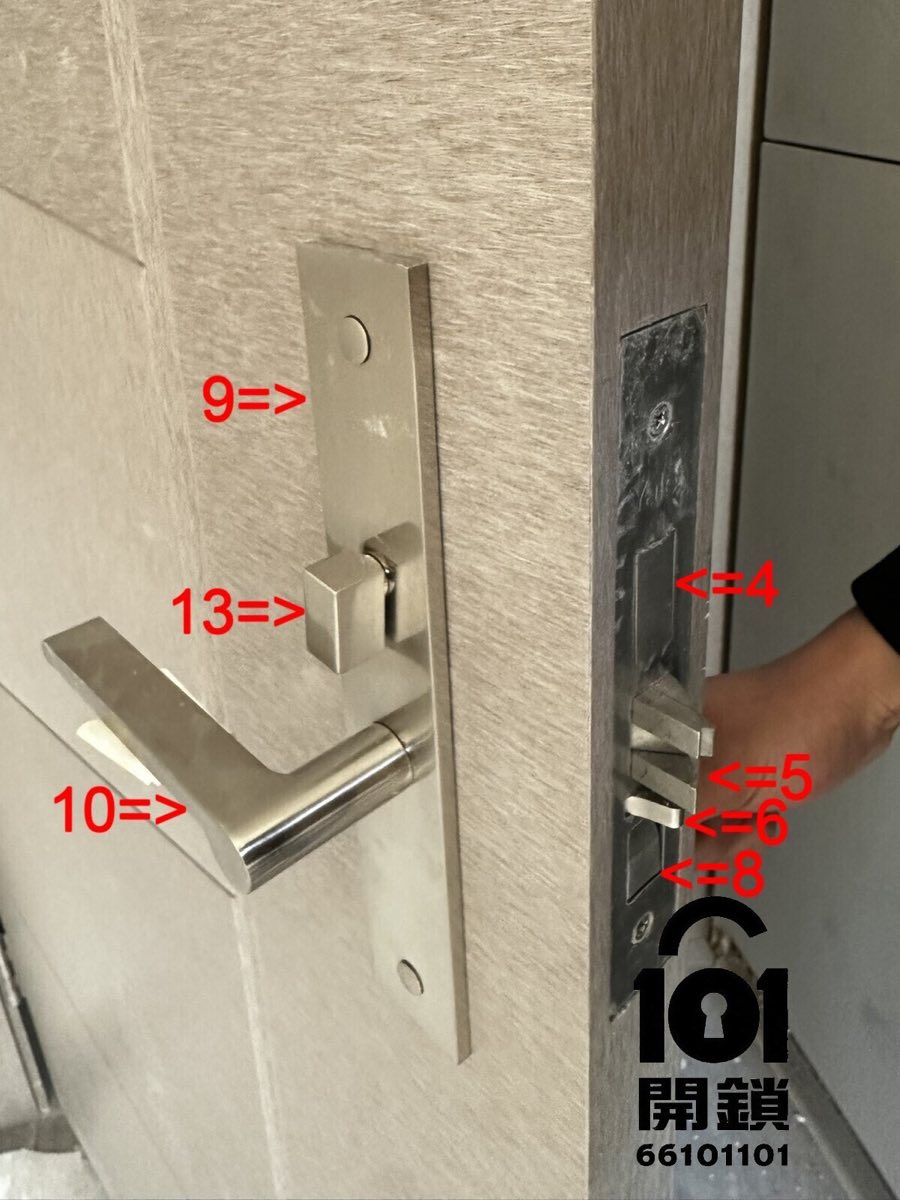
Indoor horizontal handle, press down to open the door.
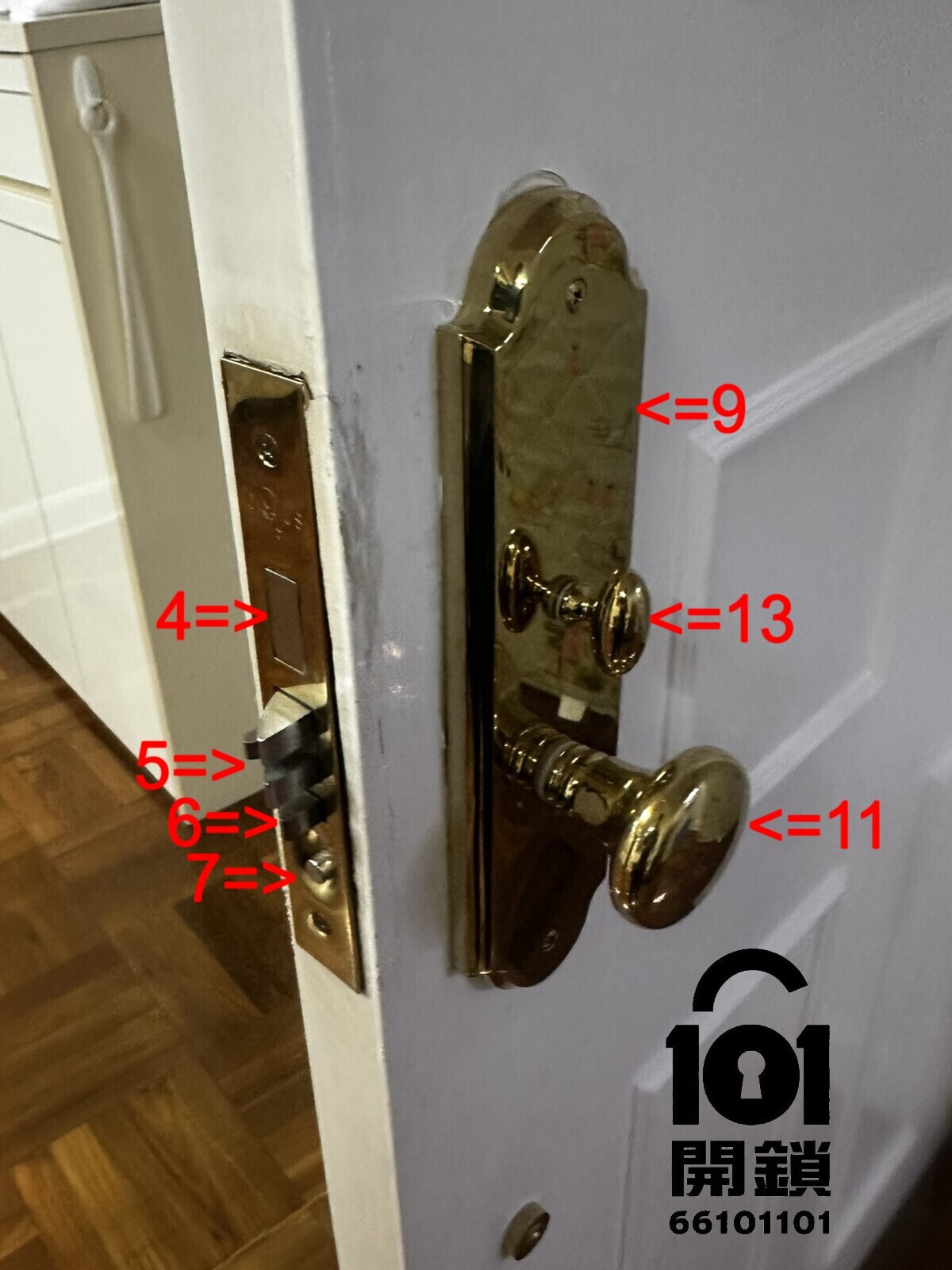
Indoor ball handle, turn left and right to open the door.
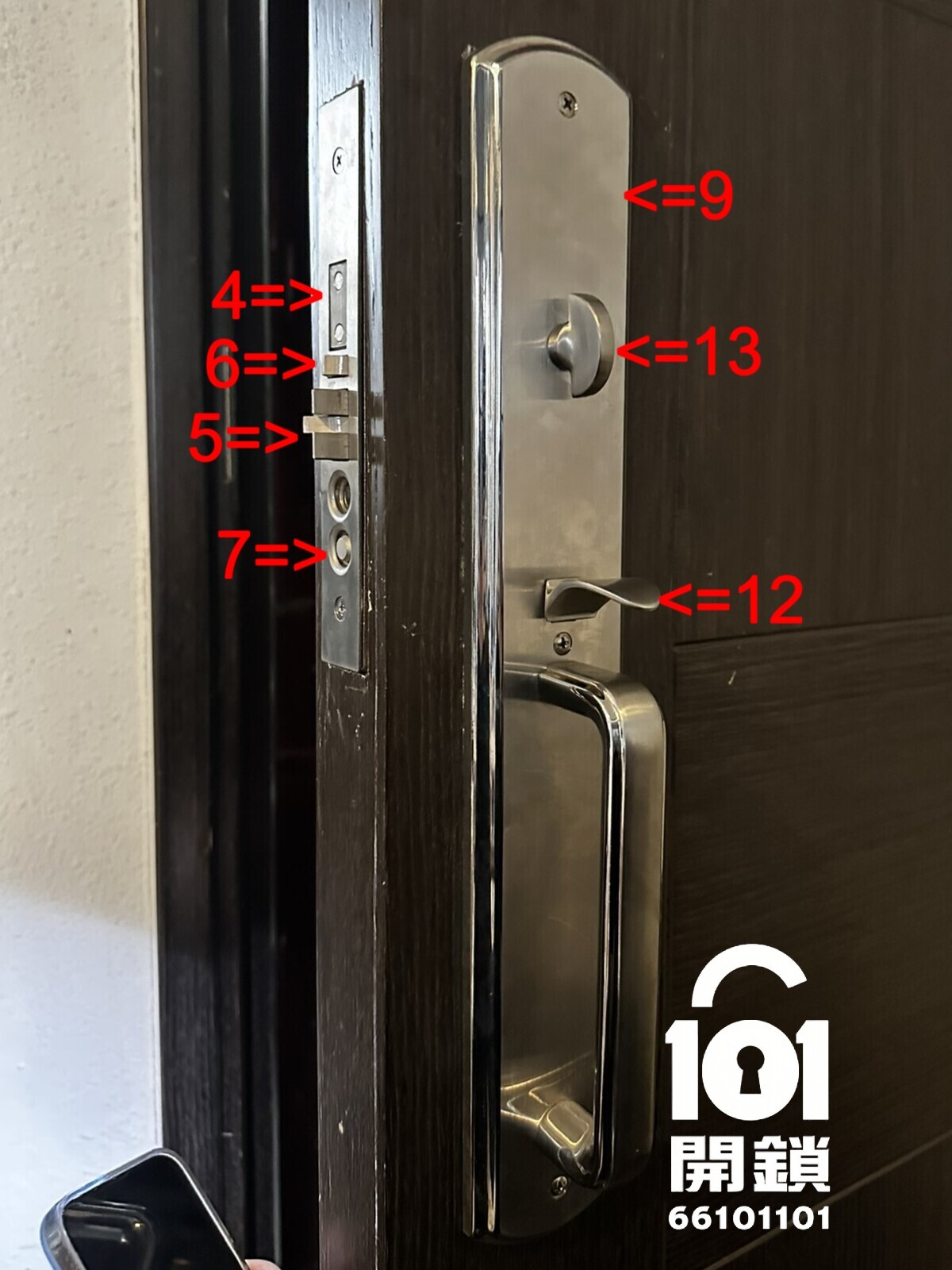
The indoor spoon holder pulls his hand and presses down to open the door.
An American set of locks is mainly made of Inner panel、Outer panel、Lock cylinder and Lock body It consists of four parts. The following diagrams are used to help understanding:
| Image location | section | Usage |
|---|---|---|
| 01 | Lock cylinder | Insert the key to open or lock the door |
| 02 | Front panel | Cover the old holes |
| 03 | Handmade outdoor spoons | When the garbage system is in effect, press down to open the door. |
| 04 | Square bolt | After locking, it is completely impossible to take pictures of the door lock with film/letter card etc. |
| 05 | Shali | After the door is closed and stopped at the correct position, slide the lock into place and lock it. |
| 06 | Anti-filming | Prevent unscrupulous unlocking by photographing the door lock with film/letter card etc. |
| 07 | Garbage system (round style) | Control the outdoor spoon manual door opening function. |
| 08 | Garbage made (long style) | Control the outdoor spoon manual door opening function. |
| 09 | Rear panel | Cover the old holes |
| 10 | Horizontal handle style | Tie the handle indoors and press it down to open the door. |
| 11 | Ball handle model | Indoor spherical handle, twist left and right to open the door. |
| 12 | Spoon Handmade Model | Tie the handle indoors and press it down to open the door. |
| 13 | Indoor anti-lock | Indoor anti-locking system, only controls the square latch |
Hong Kong American-style locks are very durable, but various problems may occur after being used for a long time. According to the repair experience of local locksmiths, the most common ones are as follows:
| Common fault phenomena | Possible reasons | Simple solutions/repair suggestions |
|---|---|---|
| The key barrel of the lock cylinder is in the correct position, but the key cannot be inserted. | There is foreign matter in the key cylinder of the lock cylinder, which prevents the key from being inserted. | Remove foreign objects in the lock cylinder |
| The key barrel of the lock cylinder is not in the correct position and the key cannot be inserted. | The last time the key was pulled out, it was not in the correct position and was forced out. | Gently twist the thin key barrel back to the normal position. If it does not return to the normal position, please contact 101 to open the lock. We have special tools to twist the thin key barrel. |
| Master inserted the key so hard that it could not be twisted | Master key/traffic light key invalid | Open with master key |
| The key cannot come out after being inserted, and the thin key barrel is slightly protruding. | The screws fixing the skirting behind the thin key barrel began to loosen | You can press the thin key barrel lightly to take out the key. But please contact 101 to open the lock as soon as possible and re-fix the screws to avoid worsening the problem. |
| The lock cylinder can idle but cannot open the door | One of the screws that fixes the skirting behind the thin key barrel is loose. | The screws that fixed the kicking feet fell out of the lock body. The kicking feet cannot control the lock body. This is beyond the simple solution and requires a locksmith. |
| The thin spoon barrel is pulled out | The screws fixing the skirting behind the thin key barrel are completely loose. | Both the screws of the skirting and fixed skirting have fallen into the body of the lock, which is beyond the simple solution and needs to be dealt with by a locksmith. |
| The key is stuck after twisting | The mating parts of the lock cylinder and the lock body are worn, or the new accessories do not match | The key and the indoor anti-locking system twist at the same time, but please contact 101 to open the door and replace the door lock as soon as possible to avoid worsening the problem. |
| The lock cylinder position is incorrect | The screws fixing the lock cylinder are loose | Gently twist the lock cylinder back to the normal position. If it does not return to the normal position, please contact 101 to open the lock. We have special tools to twist the lock cylinder. |
| The lock cylinder is completely pulled out | The screws fixing the lock cylinder are loose | Tighten the cylinder lock screw |
| The screw that fixes the lock cylinder cannot be tightened | There is a problem with the lock body | Replace the lock body |
| When the door is opened, the tilt cannot pop up normally. | There is a problem with the lock body | Replace the lock body |
| When opening the door, the square latch cannot spring normally. | There is a problem with the lock body | Replace the lock body |
| When the door is opened, the tilt pops up normally but cannot be locked when the door is closed. | Lock alignment problem | Grind the lock wider/change the lock position |
American-style locks have many accessories to choose from, which makes them easier to replace, but it also makes it easier to get caught. If you want to replace the lock cylinder or lock body yourself in Hong Kong, there are a few points you should pay special attention to:
Whether your American lock has any kind of fault, or you want to replace the lock cylinder or lock body, we can provide quotations and on-site inspection and repair services. We are familiar with the American lock models commonly used in major housing estates in Hong Kong. We have complete accessories and can perform on-site repairs to prevent you from buying the wrong parts.
Have any questions? Contact a specialist immediately for answers